
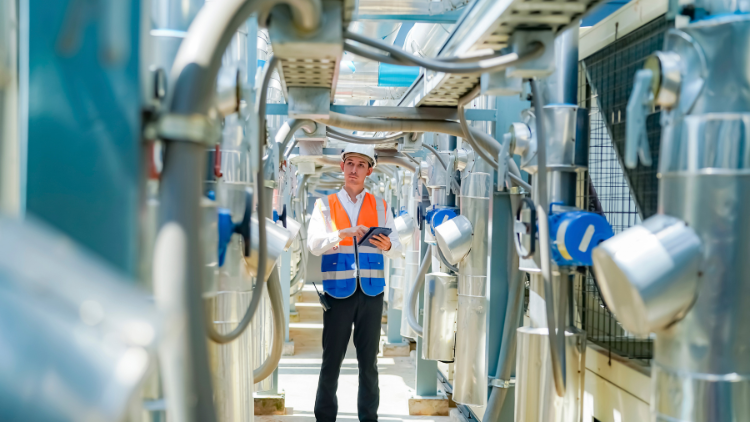
Facility expansions and new line start-ups are often seen as positive milestones for pharmaceutical companies. They may signal growth, increased capacity, new product introductions, improved technology or a stronger market position. However, from a Quality Assurance perspective, they also represent periods of heightened risk.
When a new manufacturing area, packaging line, laboratory, warehouse space, cleanroom or utility system is introduced, the organisation is not simply adding physical capacity. It is changing the operating environment in which product quality is created, controlled and protected. New equipment, new flows, new procedures, new people, new interfaces and new data systems can all introduce risk if they are not properly planned, qualified and governed.
This is why QA must be involved from the earliest stages of facility expansion and line start-up projects. Quality risk management cannot be added at the end as a final approval step. It must be built into project design, commissioning, qualification, validation, training and operational readiness.
Expansion Creates Opportunity and Risk
The commercial logic behind facility expansion is often clear. Companies may need to increase output, respond to demand, bring outsourced activities in-house, add new technology or improve manufacturing resilience. Yet the quality implications can be significant.
A new line may change product contact surfaces, processing parameters, cleaning requirements, hold times, environmental exposure, operator interventions or batch record design. A facility expansion may alter material flows, personnel flows, waste routes, air handling, pressure cascades, segregation controls or contamination risks. Even when the product and process appear familiar, the new environment may behave differently.
For this reason, successful expansion projects require more than engineering delivery. They require strong quality oversight and a clear understanding of how each change could affect GMP compliance, process control and patient safety.
QA’s Role Starts Before Qualification
One of the most common mistakes in facility expansion projects is involving QA too late. If QA only enters the process during protocol approval or final readiness review, key design decisions may already have been made.
Early QA input can help shape the project around GMP expectations from the outset. This includes reviewing user requirement specifications, assessing facility layouts, challenging material and personnel flows, identifying critical utilities, defining qualification strategy and ensuring that quality risks are considered before construction or installation begins.
QA should be asking practical questions early in the project:
- Does the design support GMP operations?
- Are personnel, product, component and waste flows clearly separated where required?
- Are cleanroom classifications and pressure differentials appropriate?
- Could the expansion affect existing validated processes or utilities?
- Are new systems integrated with existing quality and data governance requirements?
- Have cleaning, maintenance and calibration requirements been considered?
- Is the proposed line suitable for the intended product mix?
- Are contamination, cross-contamination and mix-up risks adequately controlled?
These questions are easier and less costly to address during design than after installation.
Quality Risk Management as the Project Framework
Quality risk management should provide the framework for decision-making throughout the expansion or start-up lifecycle. Tools such as risk assessments, failure mode and effects analysis, contamination risk assessments, process mapping and hazard analysis can help teams identify where controls are needed.
The goal is not to create paperwork for its own sake. The goal is to focus attention on the areas that matter most to product quality.
For example, a new filling line may require detailed assessment of aseptic interventions, line clearance, equipment cleaning, environmental monitoring points, stopper or component handling, and operator access. A new packaging line may require focus on serialisation, artwork control, label reconciliation, vision system performance and line clearance. A new warehouse or dispensing area may require attention to temperature control, segregation, sampling arrangements and material traceability.
A risk-based approach allows QA and project teams to apply the right level of control to the right areas.
Commissioning, Qualification and Validation Must Be Connected
Facility expansions and new line start-ups often involve multiple phases: design, construction, commissioning, qualification, process validation and operational handover. These phases should not be treated as isolated workstreams.
Commissioning can provide valuable evidence that systems are installed and functioning as intended. Qualification confirms that facilities, utilities and equipment are suitable for their intended use. Process validation demonstrates that the process can consistently deliver a product meeting its predefined quality requirements.
The risk is that documentation becomes fragmented. Engineering teams may focus on commissioning, validation teams on protocols, operations on production readiness and QA on approval. If these activities are not aligned, gaps can appear.
QA should help ensure that the validation strategy is coherent, scientifically justified and linked to critical quality attributes, critical process parameters and the intended use of the facility or line. This includes ensuring that acceptance criteria are meaningful, deviations are properly investigated and unresolved issues are not carried into routine production without appropriate justification.
Contamination Control Must Be Designed In
For sterile and high-risk manufacturing environments, contamination control is a central consideration. Facility expansions and new line start-ups can introduce new contamination risks through layout changes, air handling modifications, increased personnel movement, new cleaning methods or altered process flows.
A contamination control strategy should not be written after the facility is built. It should inform the design.
This includes consideration of cleanroom classification, pressure regimes, environmental monitoring, cleaning and disinfection, sterilisation processes, transfer systems, gowning, utilities, equipment design and operator interventions. For sterile manufacturing in particular, the start-up phase should include strong oversight of media fills, environmental qualification, aseptic process simulations and contamination trend review.
The best contamination control strategies are not static documents. They are living systems that evolve as new data becomes available during start-up and routine operations.
Training and Culture Are Part of Readiness
New facilities and lines often come with new procedures, new equipment, new responsibilities and new risks. Even experienced operators may need to work differently in a new environment. This makes training a critical part of quality risk management.
Training should go beyond simply reading procedures. Personnel should understand why controls are in place, what risks they are designed to prevent and how to respond when something does not look right. This is particularly important during start-up, when teams may be under pressure to deliver batches quickly.
QA has an important role in reinforcing a culture where issues are escalated early, deviations are investigated properly and production targets do not override GMP decision-making.
Start-Up Data Should Be Treated as Quality Intelligence
The first weeks and months of a new line or expanded facility provide valuable information. Deviations, alarms, interventions, rejected units, cleaning observations, environmental monitoring results, maintenance issues and operator feedback can all reveal how well the new process is performing.
Rather than treating these as isolated events, QA should help convert start-up data into quality intelligence. Are issues repeating? Are controls working as intended? Are there unexpected trends? Are procedures clear? Are batch records capturing the right information? Are operators encountering practical challenges not anticipated during design?
This early data can support process improvement, procedure updates, additional training, CAPA and, where necessary, changes to the control strategy.
Avoiding the Rush to Routine Operations
Commercial pressure during expansions and start-ups can be intense. Businesses want new capacity online quickly. Clients want supply. Project teams want a handover. However, moving too quickly from project mode to routine GMP operations can create risk.
Before routine production begins, QA should be confident that qualification and validation activities are complete or appropriately justified, critical deviations are closed or controlled, personnel are trained, procedures are effective, quality agreements are updated where relevant, maintenance and calibration plans are in place, and monitoring systems are functioning.
Operational readiness is not simply a checklist. It is a state of control.
Final Thought
Facility expansions and new line start-ups are defining moments for pharmaceutical organisations. When managed well, they can strengthen capacity, improve resilience and support long-term growth. When managed poorly, they can introduce quality risk, compliance exposure and operational disruption.
Quality Assurance has a central role in ensuring these projects succeed. By becoming involved early, applying risk-based thinking, challenging design assumptions and overseeing validation readiness, QA helps protect both the business and the patient.
In pharmaceutical manufacturing, expansion is not just about building more space or installing new equipment. It is about building confidence that quality can be delivered consistently from day one.